Welcome To My Gallery
-
![]()
listen, breathe feel the ocean
76cm x 51cm
Oil and oleogel on Belgian linen
1,000
In this painting, the fusion of symbolism and realism serves as a conduit for expressing a personal relationship with the ocean. The use of traditional Indigenous symbols is intentional, weaving ancestral knowledge into the visual narrative. These symbols, rich with meaning, reflect my deep connection I hold with the sea.
As the waves crash against the shore, the detailed realism captures the dynamism and power of the ocean. Each brushstroke is deliberate, showcasing the varying depths and colors of the water, illustrating its life-giving properties as well as its formidable nature. By intertwining these elements, the painting invites viewers to contemplate the ocean not merely as a physical entity but as a living, breathing force that embodies stories, traditions, and cultural significance.
The combination of realism and Indigenous symbolism creates layers of understanding, prompting a dialogue about the ocean's role in life. This piece is more than just a visual experience; it encourages reflection on how such landscapes influence cultural identities and the narratives we share about nature and existence. Through this artistic exploration, I aim to honor those traditions while bringing my own perspective to the forefront.
-
![]()
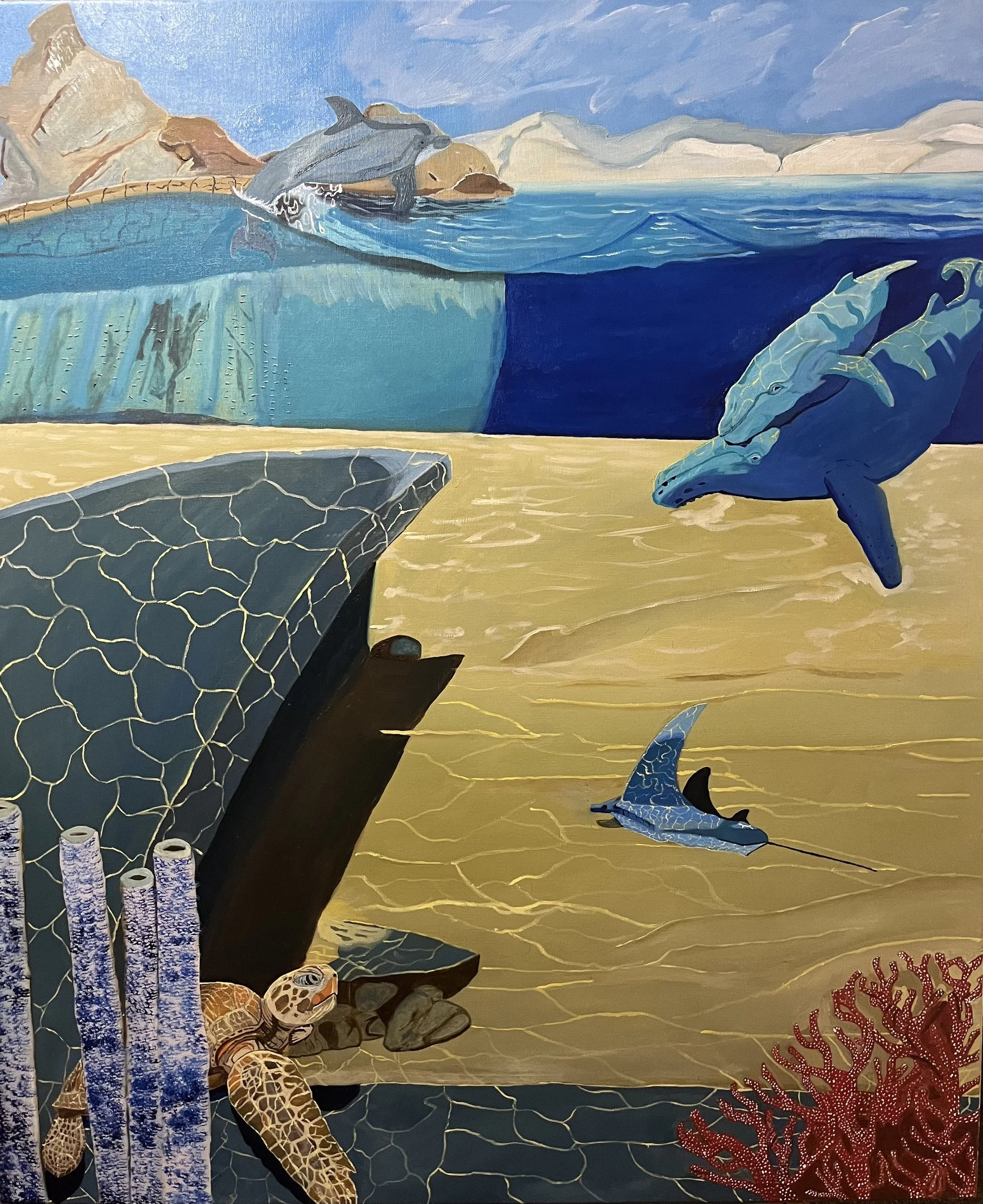
Local Oasis (Commissioned)
This painting captures the stunning beauty of Julian Rocks, a renowned natural landmark off the coast of Byron Bay. The composition intricately weaves together the vibrant colors of the ocean and the rocky formations, showcasing the dynamic interplay between land and sea. Various marine life, such as a Sting ray, sea turtles, and coral, populate the waters surrounding the rocks, highlighting the rich biodiversity of this marine environment . The details of the painting evoke a sense of tranquility and wonder, inviting viewers to appreciate the natural splendor of this iconic Australian location.
-
![]()
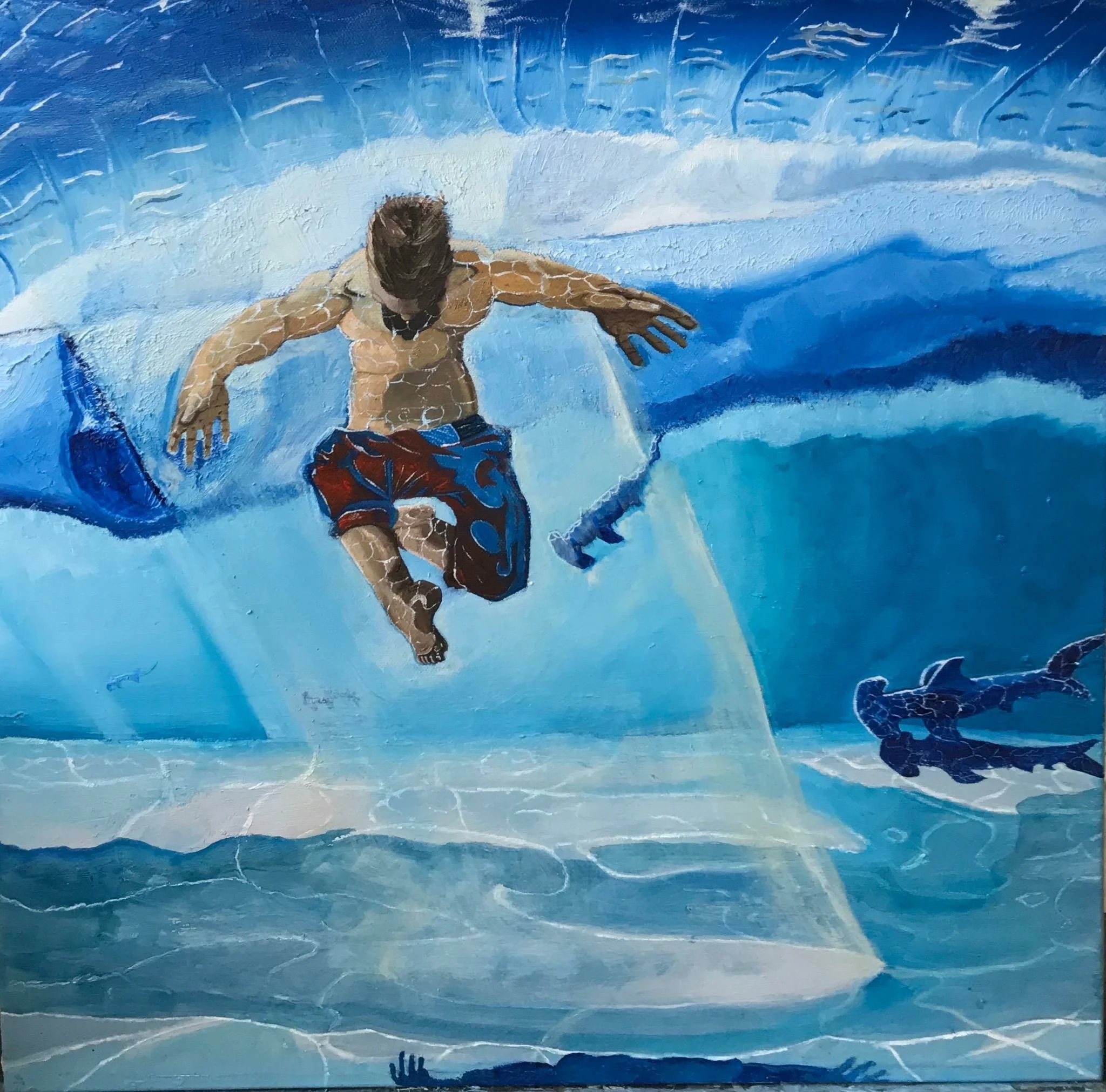
Divided Distractions
61cm x 61cm
Oil and oleogel on Belgian linen
$950
This painting explores the myriad distractions present in contemporary life. The composition is intentionally busy, emphasizing that busyness itself can be a form of distraction. In the foreground, the mother statue points to the imposing statue of Poseidon, yet her daughter is fixated on Shark Fin Mountain, symbolizing how one's attention can easily drift away from meaningful experiences.
Similarly, the couple statue captures a moment while taking a selfie with the diver and a tiger shark, yet a closer inspection reveals that the man is preoccupied with his phone, scrolling through Facebook. This juxtaposition highlights the tension between real-life engagement and digital distractions, inviting viewers to reflect on their own attention in a world filled with constant stimuli. As the eye wanders through the chaotic scene, it raises questions about what we miss when we are distracted by the noise of modern existence.
-
![]()
Blue Haven (Commissioned)
This painting captures the vibrancy and complexity of underwater life, showcasing a diverse array of marine creatures. From the majestic movement of schools of fish to the intricate details of coral reefs, each element contributes to a rich tapestry that reflects the hidden world beneath the ocean's surface. The artwork explores themes of coexistence, highlighting the delicate balance between species and their habitats. By illustrating the interactions among various marine life forms, the painting invites viewers to appreciate the enigmatic and often overlooked wonders of the aquatic environment. It serves as a reminder of the importance of protecting these ecosystems, which are essential to the health of our planet.
-
![]()
Marine reserve (Commissioned)
Marine reserves serve as vital sanctuaries for a diverse array of marine life, providing shelter and protection just below the ocean's surface. These designated areas empower ecosystems to thrive by restricting activities such as fishing and resource extraction. By allowing marine habitats to recover and flourish, reserves contribute to biodiversity and promote healthier ocean environments.
The benefits of marine reserves extend beyond fish populations; they can enhance local economies through sustainable tourism and fishing practices. Healthy marine ecosystems support a variety of species, from coral reefs to kelp forests, which are critical for maintaining ecological balance.
In summary, marine reserves are essential for ensuring the longevity of marine species and habitats, emphasizing the importance of conservation in our oceanic ecosystems.
-
![]()
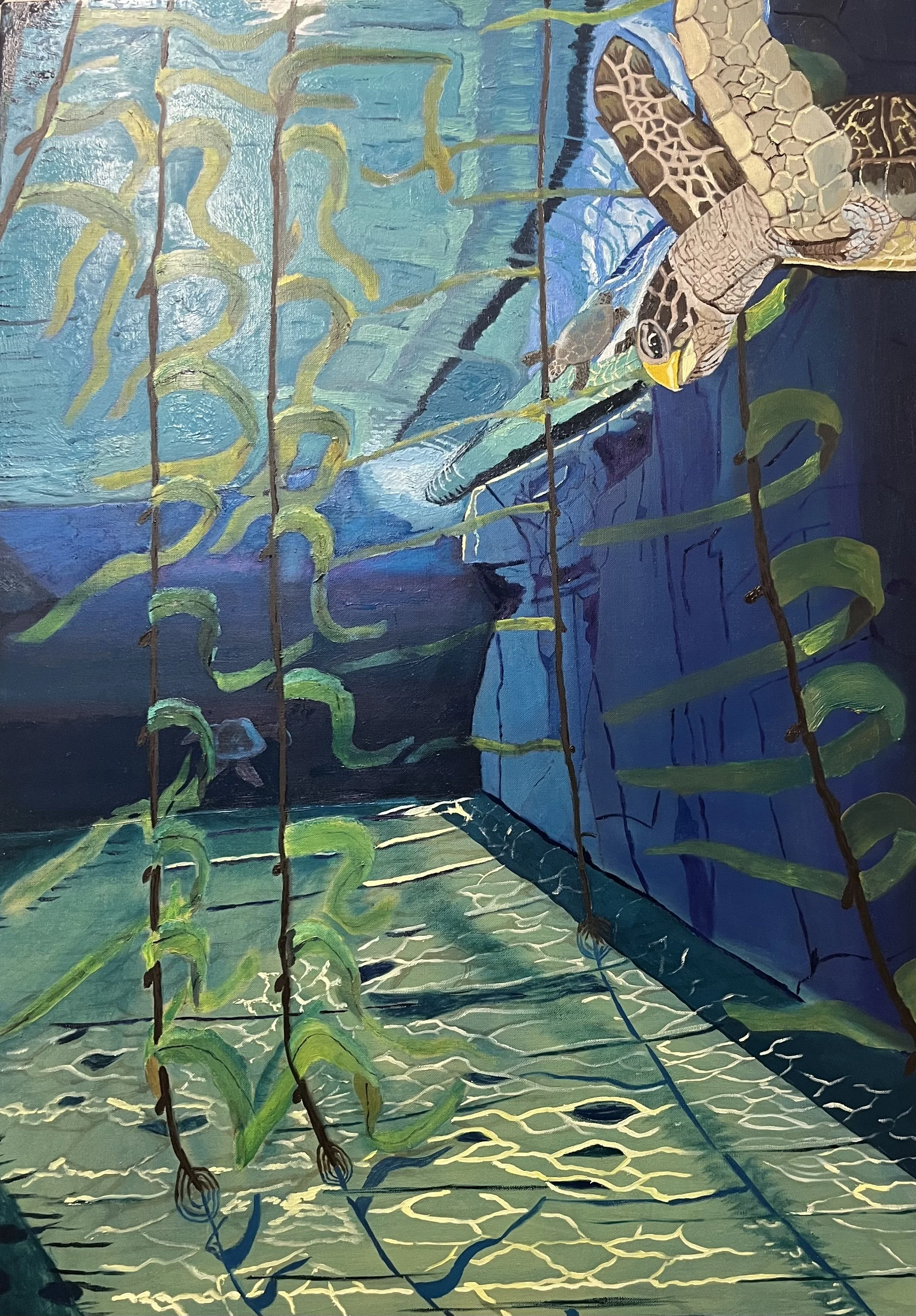
Life Below
Oil on Belgian Linen
Price: $800
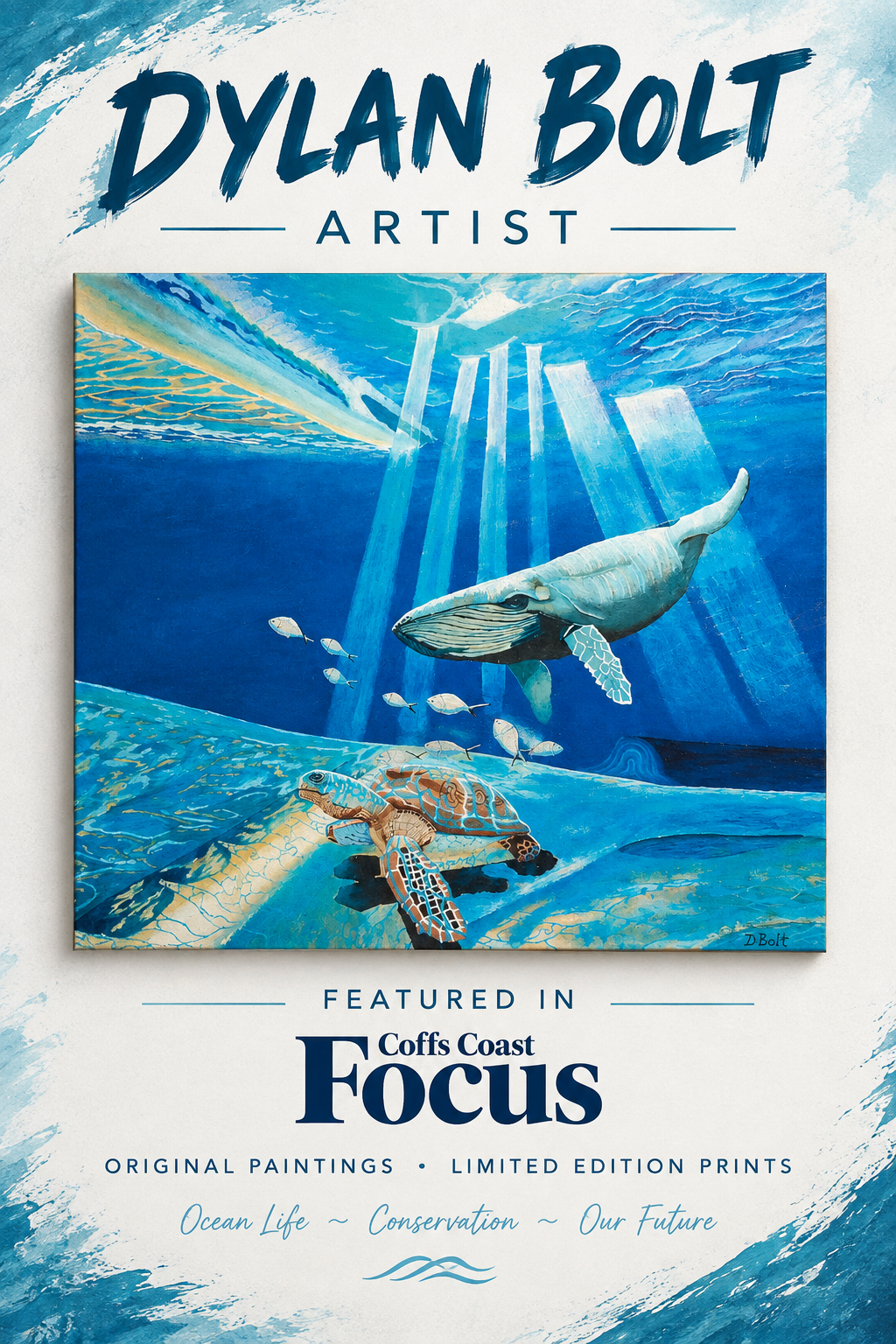
This painting embodies the contrast between the dynamic and tranquil aspects of marine life. The striped marlin, characterized by its swift movements and agility, symbolizes the aggressive nature of predation and survival within its ecosystem. It navigates the ocean with grace, representing the relentless pursuit of food and the instinctual need to evade predators.
In stark contrast, the sea turtle offers a glimpse into a different existence—one of calm resilience. The sea turtle moves through its environment with a deliberate pace, embodying patience and a strong connection to the ocean. Its battles are less about speed and more about endurance, highlighting the challenges of foraging and migration.
Together, these creatures reflect the diverse rhythms of life beneath the waves. Each represents a unique approach to survival, shaped by their adaptations to the ocean’s ever-changing conditions. Through this artwork, I aim to evoke an appreciation for the rich tapestry of marine life and the intricate interplay between speed and steadiness within their habitats.
-
![]()
beneath the wave (sold)
This painting represents a significant milestone in my artistic journey. Created during a time when I was still exploring my style, it holds a special place in my heart. It was purchased during an exhibition at the Lismore gallery, which further validates its importance. The process of painting this piece was enjoyable and fulfilling, and I felt compelled to share it on my website.
Beyond its aesthetic appeal, this work symbolizes the direction I aspired to take in my art. It played a crucial role in shaping my thoughts and ideas for future pieces, helping to refine my artistic vision. This painting is not just a reflection of the past; it is a foundational element that has influenced my growth and development as an artist.
-
![]()
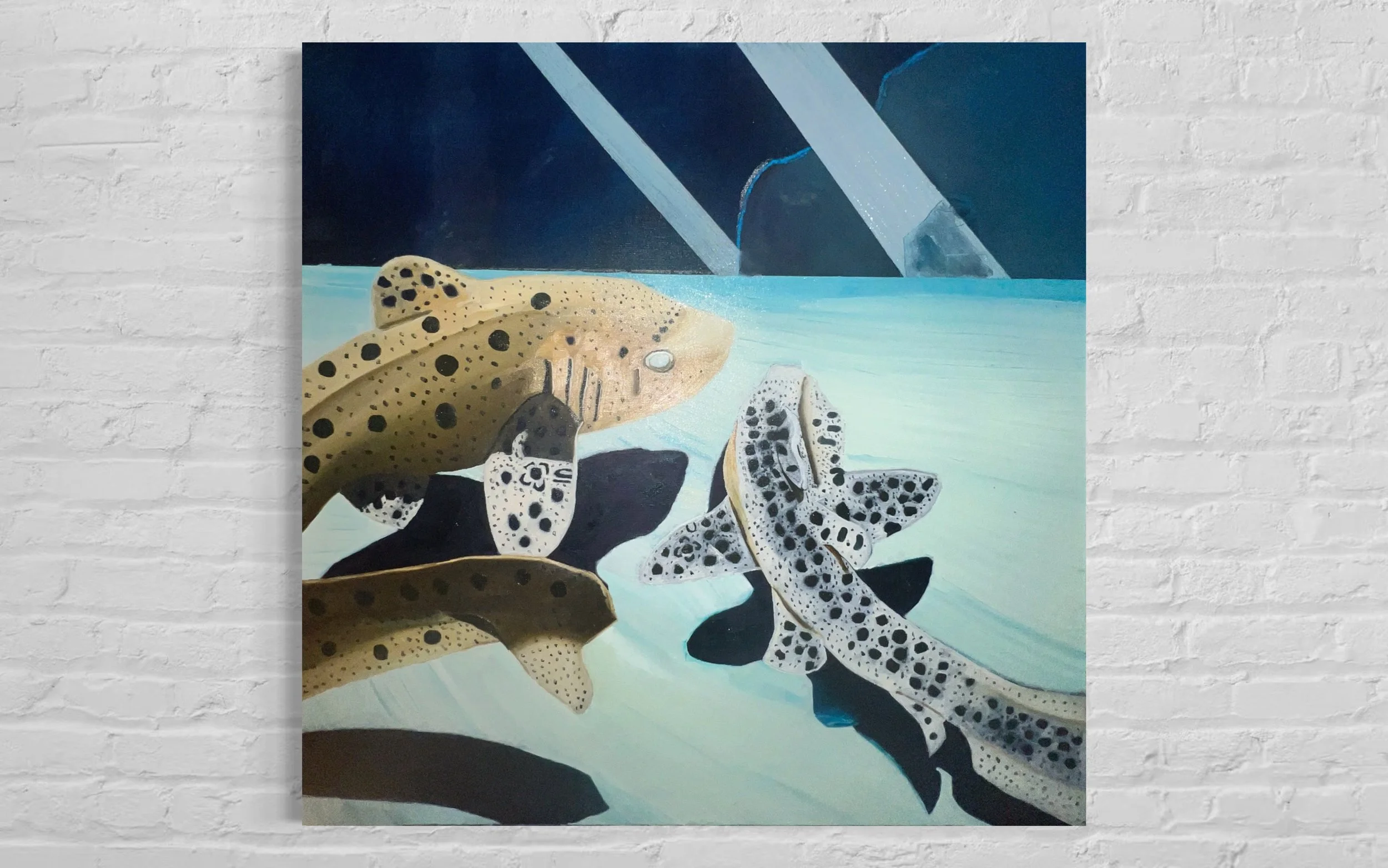
Mother and Child arrive and the Campsite
Oil and Oelogel on Belgian linen
$1500
(SOLD)Mother and Child arrive at the campsite. Discusses how leopard sharks deposit their eggs in protected habitats, ensuring a secure environment for their offspring.
-
![]()
Migration Buddies
76cm x 76cm
Oil and oleogel
SOLD
This painting invites the viewer to reflect on the hidden journeys unfolding beneaththe waves. The ocean is alive with migration—vast movements of whales, schools of
fish, sea turtles, and even microscopic plankton, all following ancient routes guided
by instinct, temperature, and tides. These interactions are not just biological; they are
ecological conversations, patterns of survival and connection that shape the health
of our planet. Through layered textures and fluid forms, this piece seeks to capture
the rhythm, mystery, and scale of oceanic migration, prompting viewers to wonder:
who is moving, and why?